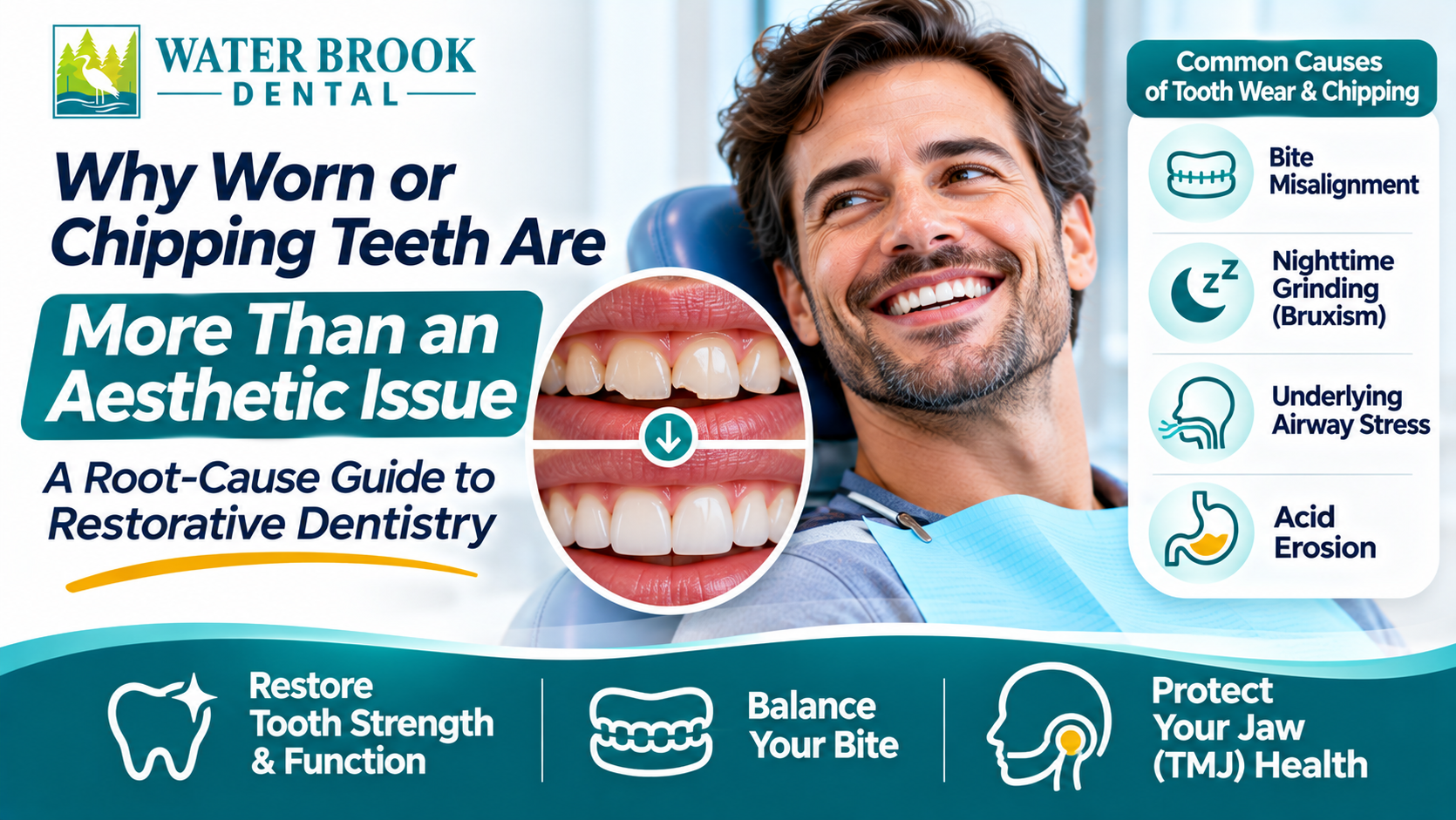
When most people notice a chip in a tooth or see that their enamel looks a little shorter than it used to, their first thought is usually visual. It’s natural to focus on how a smile looks in photos or in the mirror. However, in modern dentistry, worn or chipping teeth are rarely just a cosmetic concern — they are functional warning signs.
Your mouth is a complex mechanical system where your teeth, jaw joints, and chewing muscles must work in harmony. When one part of that system is out of balance, the rest of the mouth absorbs the force. Understanding why teeth wear down is the first step toward restoring lasting comfort, function, and confidence.
What Causes Teeth to Chip and Wear Down?
Enamel is the hardest tissue in the human body, so when it starts wearing thin or breaking, there is almost always an underlying root cause. Common triggers include:
Bite Misalignment (Occlusion Instability): If your top and bottom teeth don’t meet evenly, certain teeth take on more pressure than they were designed to handle.
Nighttime Grinding and Clenching (Bruiser): Friction from clenching during sleep can flatten chewing surfaces and cause micro-fractures along the edges of your teeth.
Underlying Airway Stress: Many patients who grind their teeth at night are actually struggling to breathe. When the body experiences subtle airway interruptions during sleep, the jaw reflexively shifts forward to open the airway, causing heavy tooth-on-tooth friction.
Acid Erosion: Acidic diets or gastrointestinal reflex can weaken enamel, making it far more susceptible to mechanical wear.
Looking Beyond the Quick Fix
Patching a chipped tooth with a simple resin filling can help temporarily, but if the underlying cause of the strain isn’t addressed, that repair will likely break again.
Comprehensive restorative dentistry takes a full-mouth approach. Rather than treating individual teeth in isolation, we look at your entire bite structure:
Restoring Vertical Height: Rebuilding the original height of worn teeth relieves pressure on your jaw joint and restores natural facial support.
Balancing the Bite: Ensuring forces are evenly distributed prevents future chipping, jaw muscle fatigue, and cracked restorations.
Protecting Jaw Health: Proper alignment keeps your mandibular joint (TMJ) resting in a stable, comfortable position.
What to Expect from Modern Restorative Care
Restoring your smile doesn’t mean months of uncomfortable procedures or guessing games. Using digital intramural scanning and 3D diagnostic design, we map out your bite with extreme precision before treatment ever begins. This allows you to see and understand your restorative plan step by step, whether you need custom crowns, targeted bridge work, or a complete full-mouth rehabilitation.
Take the First Step Toward Functional Relief
If you’ve noticed changes in your smile, sensitivity, or uneven tooth wear, getting a comprehensive functional evaluation can protect your teeth for decades to come.
Water Brook Dental proudly serves individuals and families across Washington, DC, and Maryland with compassionate, patient-centered care.
Where Exactly Are You Located?
We have two convenient offices in Washington DC.
14th St NW Office 2750 14th St NW, Washington, DC 20009
Eastern Ave Office 7826 Eastern Ave NW, Washington, DC 20012